Oahu Box Jellyfish Calendar: What Visitors Need to Know
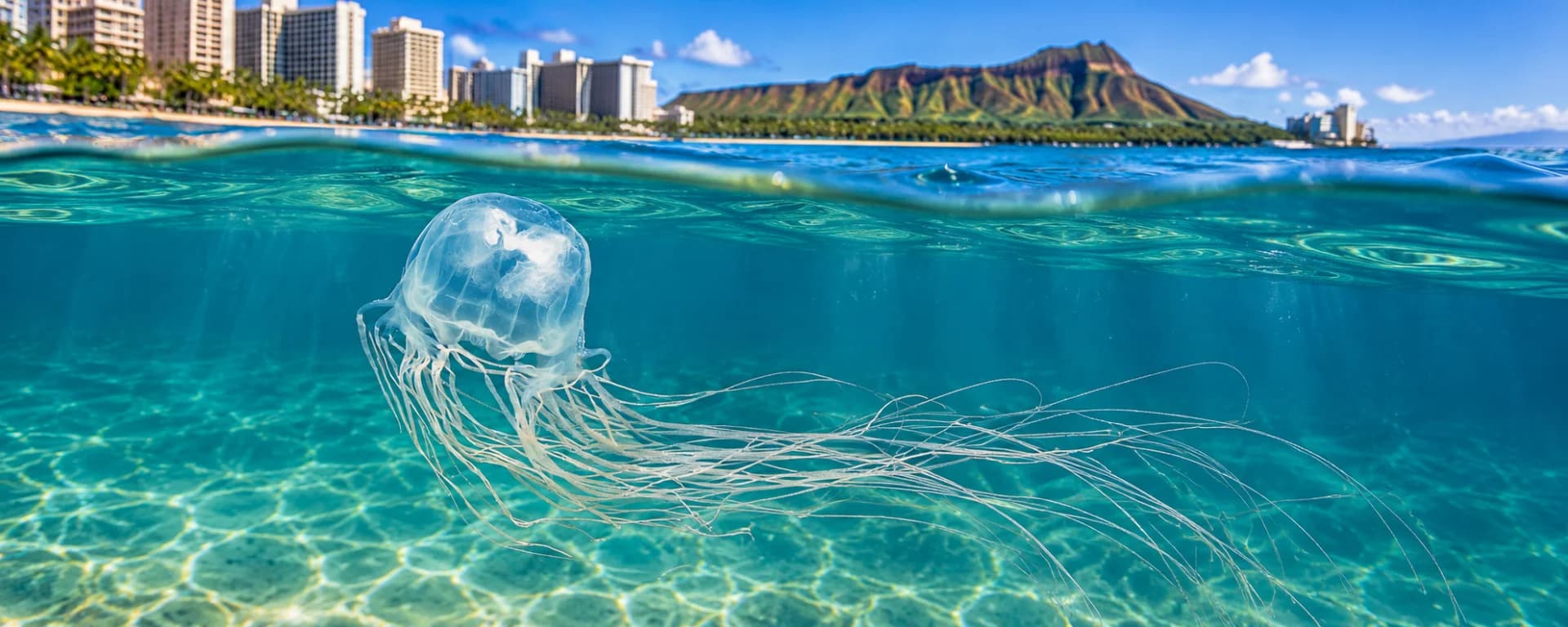
If you're planning to spend time at the beach on Oahu, there's one local phenomenon worth knowing about before you jump into the water: box jellyfish.
Oahu experiences fairly predictable box jellyfish arrivals that are connected to the lunar cycle. That means visitors can actually check a box jellyfish calendar when planning beach days.
But the calendar is only a prediction. Jellyfish can appear outside the expected dates, and ocean conditions can change quickly.
Here's what visitors should know before heading to the beach.
Why Does Oahu Have a Box Jellyfish Calendar?
Box jellyfish around Oahu tend to appear close to shore on a surprisingly predictable schedule.
Researchers and ocean-safety officials have found that significant box jellyfish arrivals commonly occur approximately 8–10 days after a full moon.
The pattern is believed to involve lunar and tidal cycles that bring jellyfish into shallow coastal waters.
Because the timing repeats each month, the Waikīkī Aquarium publishes a Box Jellyfish Calendar showing days when encounters are considered more likely.
Important
The calendar is a forecast—not a guarantee.
Jellyfish can be present on any day of the year, so always pay attention to beach warning signs and ask a lifeguard about current conditions.
Oahu Box Jellyfish Calendar
The easiest way to plan ahead is to check the official Waikīkī Aquarium Box Jellyfish Calendar before your trip.
The calendar identifies:
- Full moon dates
- Lower-probability jellyfish days
- Higher-probability jellyfish days
Higher-risk periods generally begin about a week after the full moon and last several days.
If one of your planned beach days falls inside that window, don't automatically cancel your plans. Instead, check the actual conditions at the beach that morning.
Example: Late 2026
The monthly pattern continues throughout the year.
For example, the official calendar identifies December 2–4, 2026 as high-probability box jellyfish days, with December 1 and 5 marked as lower-probability days.
Following the December 23 full moon, the next predicted period begins around December 30, with December 31 and the first days of January again falling into the higher-probability window.
This illustrates why checking the calendar can be useful when planning your Oahu itinerary.
Which Oahu Beaches Are Most Affected?
Box jellyfish are particularly associated with Oahu's south and leeward shores.
That makes the calendar especially relevant if you're staying in Waikiki or planning beach days around the southern side of the island.
However, don't assume another beach is automatically safe simply because it isn't in Waikiki.
Ocean conditions, wind, currents and marine life can vary considerably around the island.
Look for Jellyfish Warning Signs
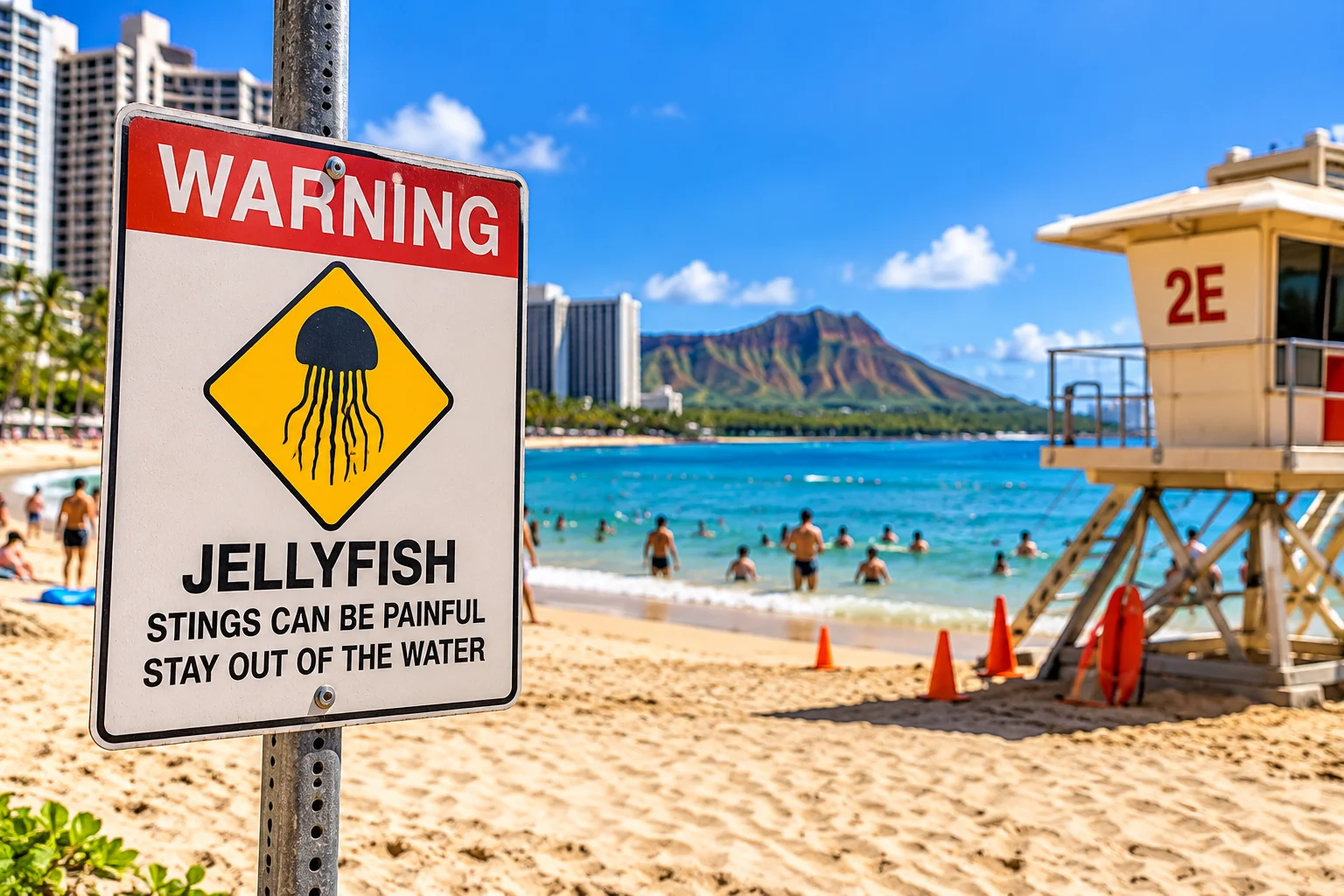
When jellyfish are present, lifeguards may post warning signs at affected beaches.
Take those signs seriously.
If jellyfish or Portuguese man-of-war have been reported—or if you can see them washed onto the beach—avoid entering the affected area.
Even a jellyfish or man-of-war lying on the sand can still sting.
When in doubt, ask the lifeguard:
"Are there jellyfish in the water today?"
That simple question is often more useful than relying only on a calendar.
Box Jellyfish vs. Portuguese Man-of-War
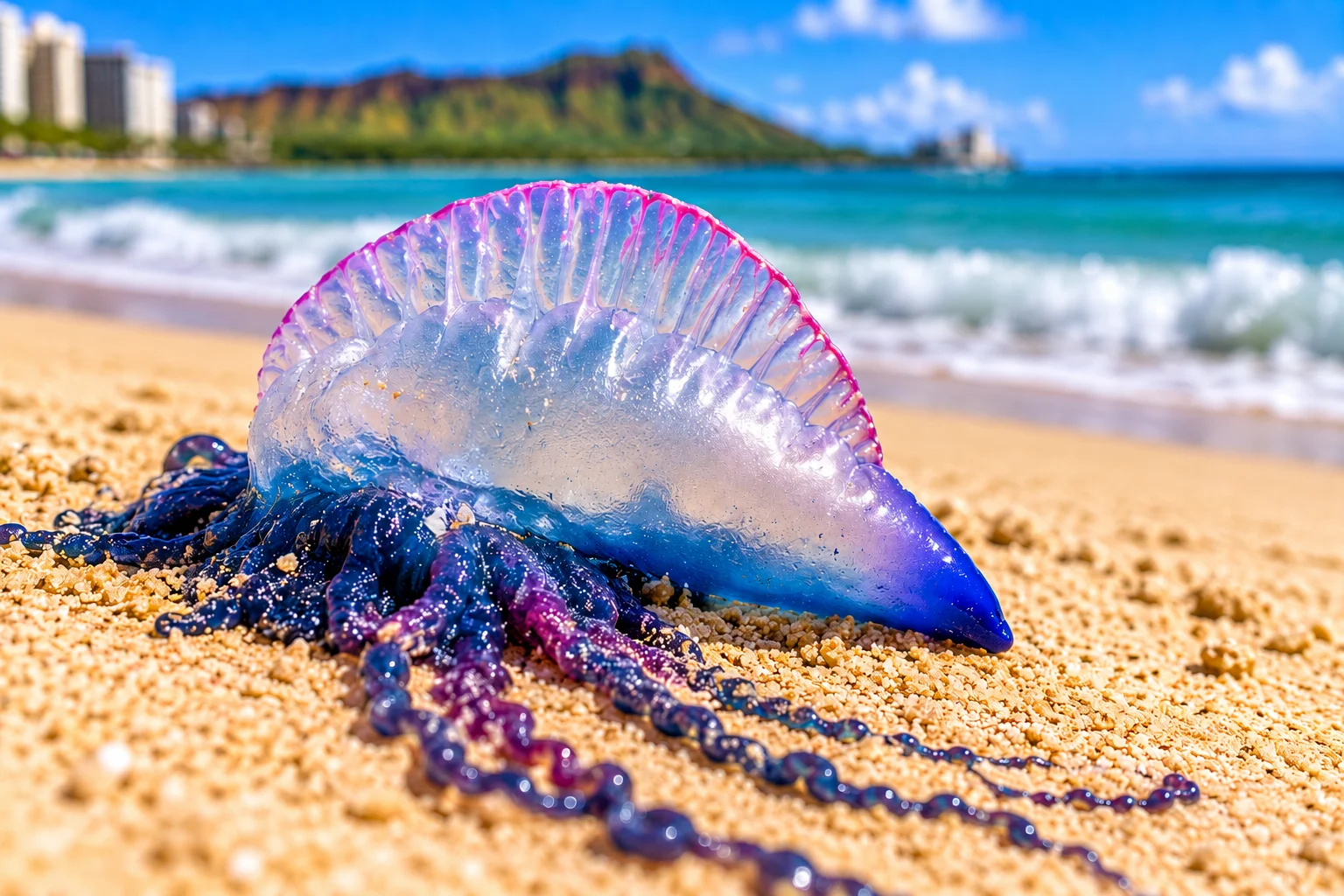
Visitors sometimes use the word "jellyfish" for both, but box jellyfish and Portuguese man-of-war are different animals.
Box Jellyfish
Oahu's recurring box jellyfish events are strongly associated with the lunar cycle.
They can be difficult to see in the water because much of their body is transparent.
Their tentacles contain stinging cells that can cause significant pain and, in some cases, more serious reactions.
Portuguese Man-of-War
Portuguese man-of-war often appear as small blue or purple floating organisms with long tentacles.
Their presence is more closely associated with winds and ocean conditions than with the monthly box jellyfish calendar.
Strong onshore winds can push them toward beaches.
And remember: don't touch one that's washed onto the sand. It can still sting.
What Should You Do If You See Jellyfish?
If you see jellyfish in the water, jellyfish washed onto the beach or an official warning sign:
Stay out of the affected water.
Don't assume that wearing water shoes or staying in shallow water makes it safe. Jellyfish can be present close to shore.
Instead, talk to the lifeguard and consider changing your plans.
Oahu has beaches on multiple sides of the island, and conditions can be very different from one coast to another.
What If You Get Stung?
If you're stung by a jellyfish or Portuguese man-of-war, get out of the water and alert a lifeguard immediately if one is available.
Avoid touching tentacles with your bare hands.
If the person has a severe reaction, trouble breathing, loses consciousness or develops other serious symptoms, call 911 immediately.
First-aid recommendations can vary depending on the type of marine animal involved, so following instructions from lifeguards or medical professionals is preferable to experimenting with remedies you've heard about online.
The Calendar Isn't the Only Thing to Check
Jellyfish are only one part of Oahu beach safety.
Before entering the water, also look at:
- Surf conditions
- Rip currents
- Shorebreak
- Wind
- Brown-water advisories
- Posted beach warnings
- Lifeguard instructions
A beach that looked calm yesterday may have completely different conditions today.
North Shore Conditions Change Dramatically by Season
Visitors should be particularly careful about assuming that a famous beach is automatically a swimming beach.
During calmer summer conditions, many North Shore locations can be excellent for swimming and snorkeling.
During winter, however, the same coastline can experience extremely large surf and powerful currents.
If you're unfamiliar with local conditions, don't judge safety simply by watching other people enter the water.
Brown Water Means Think Twice
Heavy rainfall can cause runoff to enter the ocean, sometimes producing visibly brown or murky water.
The Hawaii Department of Health may issue brown-water advisories after significant rainfall.
Besides reduced visibility and debris, runoff can carry contaminants into coastal waters.
Check current advisories before swimming following heavy rain.
The Safest Rule: Choose a Lifeguarded Beach
One of the simplest things visitors can do is choose a beach with lifeguard coverage.
When you arrive, look at the warning signs and ask the lifeguard about conditions before entering the water.
This is particularly valuable if you're traveling with children or aren't accustomed to Hawaiian ocean conditions.
A 60-Second Check Before Leaving for the Beach
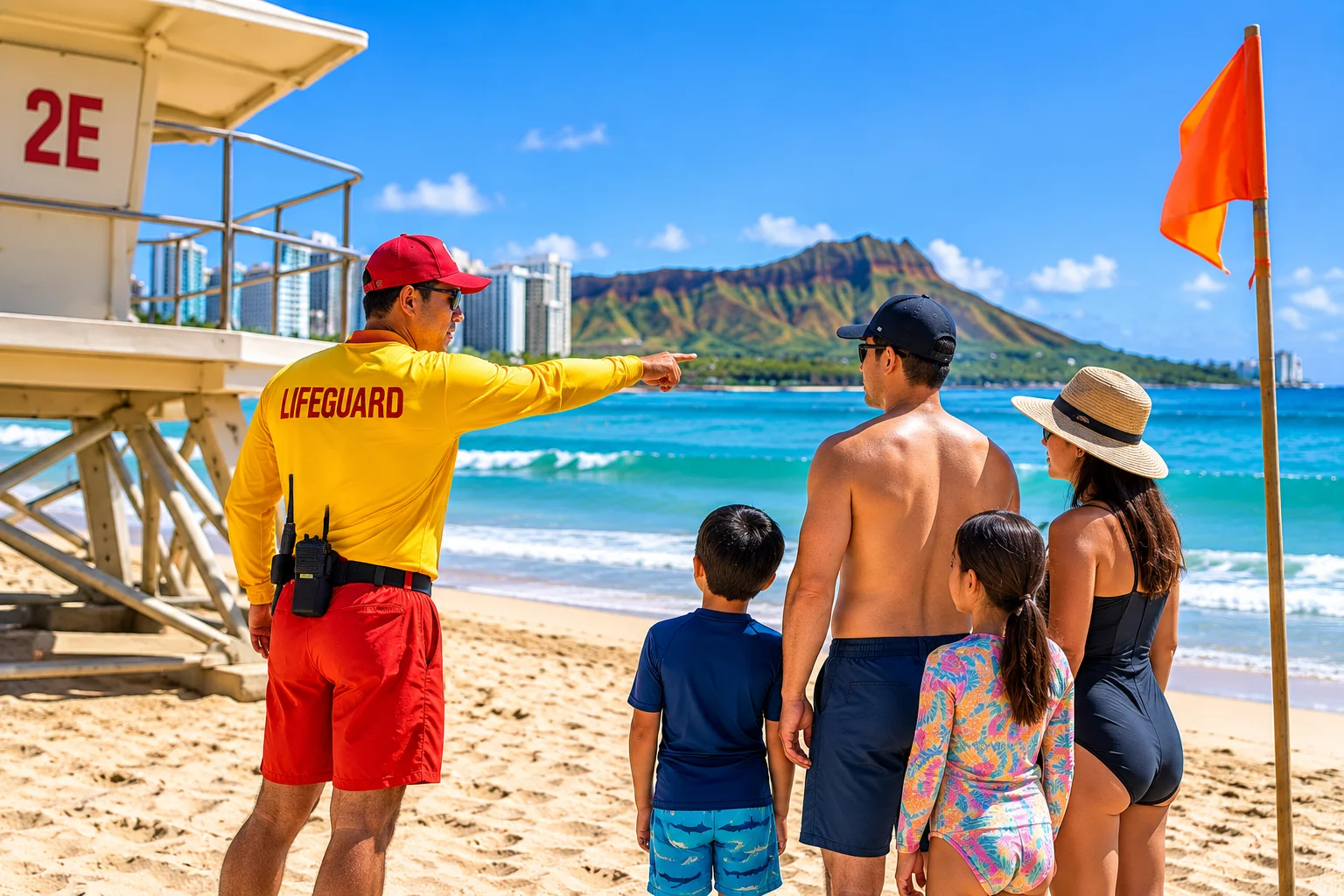
Before driving across Oahu for a beach day, check:
- Box jellyfish calendar
- Current beach and surf conditions
- Weather and wind
- Ocean or brown-water advisories
- Whether the beach has lifeguards
Then check the warning signs again when you actually arrive.
A minute of planning can save you from driving across the island only to discover that conditions aren't suitable for swimming.
Frequently Asked Questions
When do box jellyfish come to Oahu?
Significant box jellyfish arrivals commonly occur around 8–10 days after a full moon.
Are box jellyfish only found in Waikiki?
No. They can occur elsewhere, particularly along Oahu's south and leeward shores. Waikiki receives a lot of attention because it is heavily visited and closely monitored.
Does a safe date on the calendar mean there are no jellyfish?
No.
The calendar predicts periods of increased probability. Jellyfish can be present on other days.
Should I avoid Oahu during box jellyfish dates?
Usually there's no reason to organize an entire vacation around them.
Instead, keep your itinerary flexible, check conditions and consider another activity or location if warnings are posted.
Can I touch a dead jellyfish on the beach?
No.
Jellyfish and Portuguese man-of-war can still sting after washing ashore.
Where can I check the official calendar?
The Waikīkī Aquarium Box Jellyfish Calendar provides predicted arrival periods throughout the year.
Keep Your Oahu Beach Days Flexible
One of the advantages of exploring Oahu by car is that you don't have to commit your entire day to one beach.
Conditions might be poor in Waikiki while another part of your itinerary offers a completely different experience.
Check the jellyfish calendar, look at current ocean conditions, listen to lifeguards and be willing to change plans.
At NYN Rentals, we offer Jeeps, convertibles, SUVs, three-row vehicles and family-friendly options with convenient pickup and delivery around Waikiki and Honolulu.
Pack your beach gear, check the conditions and explore Oahu safely at your own pace.
Ready for Your Hawaiian Adventure?
Browse our premium rental cars and start planning your trip today.
Browse CarsRelated Articles

7 Best Scenic Drives in Oahu: A Complete Road Trip Guide (2026)
Discover the 7 most breathtaking scenic drives in Oahu, from the legendary North Shore coastline to the lush Windward Coast. Includes mile-by-mile directions, the best stops along each route, driving times, and tips on choosing the right rental car for your Oahu road trip.

Hidden Oahu: 10 Incredible Places You Can Only Reach by Car
Waikiki is just 1% of Oahu. From the untouched western tip at Kaena Point to the empty white sands of Waimanalo Beach, the island's best spots are spread across coastlines and valleys that buses don't serve. Here are 10 places worth renting a car for.

How to Choose the Right Rental Car for Your Oahu Trip (2026 Guide)
Sedan, SUV, Jeep, or convertible? The car you rent on Oahu shapes your entire trip. This guide breaks down exactly which vehicle fits your travel style, group size, and itinerary — with real comparisons on fuel costs, parking ease, comfort, and the roads you'll actually drive.

Moana Surfrider: Why a Rental Car Makes All the Difference
Staying at the iconic Moana Surfrider in Waikiki is just the beginning. Oahu's best experiences are spread across the island — and a rental car is the key to reaching all of them. Here's everything you need to know before you drive.